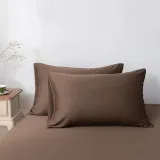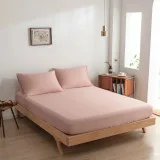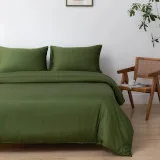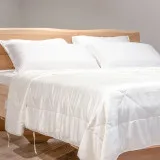








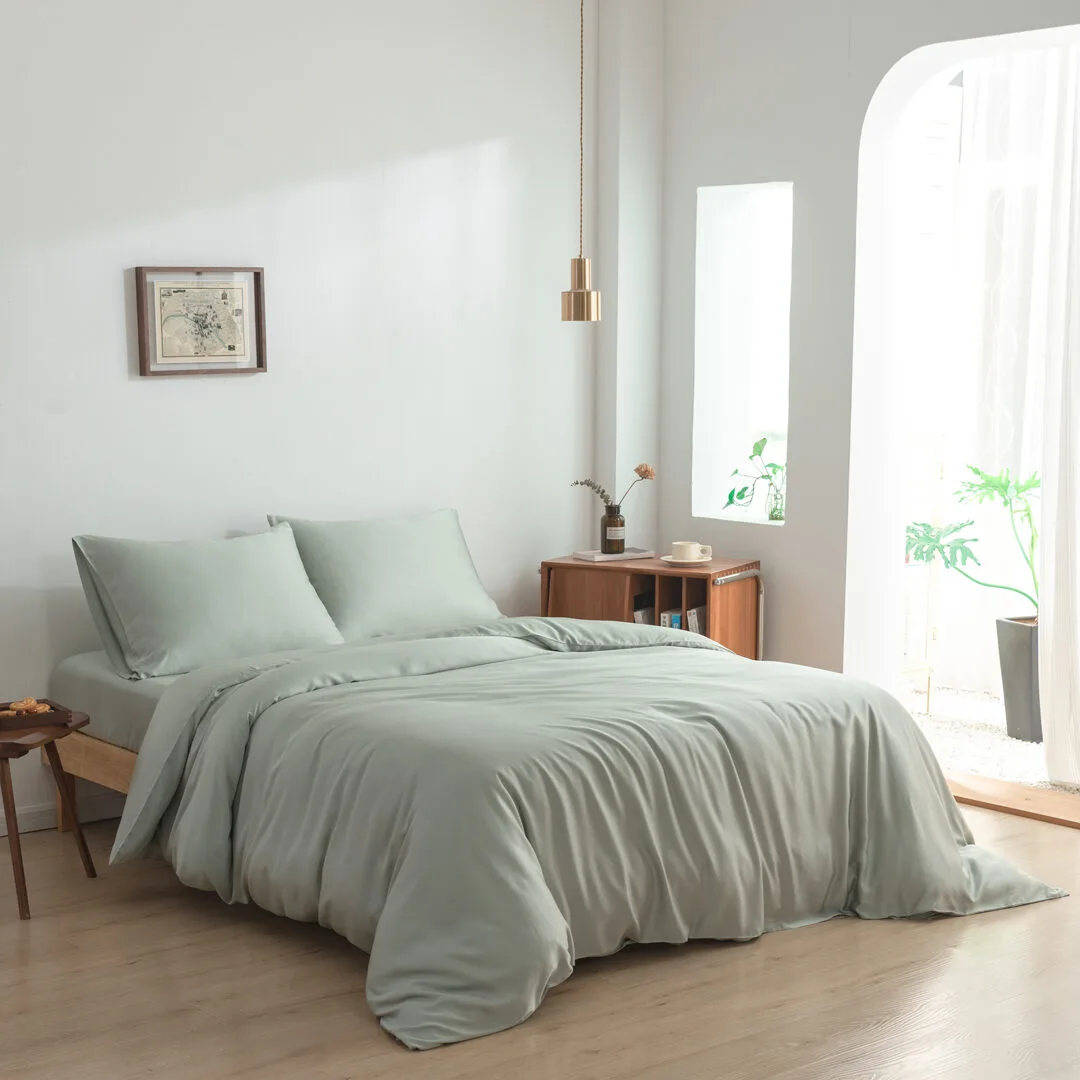
Summer nights, waking up to a soggy pillow, the blanket pushed away and then pulled back on — for many, it's an annual scenario. Air conditioning isn't yet widespread, and the weather is getting warmer every year. The good news is that the material of your bedding has more of an impact on your body temperature than most people realize.
Why do we sweat at night?
The human body naturally cools itself while sleeping — the heart rate slows, the body temperature drops by about one degree, and moisture is released from the skin. This is a natural and necessary part of the sleep cycle. The problem arises when bedding does not allow this process to proceed smoothly: moisture remains between the body and the fabric, air does not move, and the body begins to overheat.
The result is a familiar scenario: you wake up in the night, your pillow is damp, your blanket feels heavy, and your sleep is disrupted. The lack of deep sleep affects the next day more than we'd like to admit — concentration drops, mood suffers, and the immune system weakens.
This situation is exacerbated on hot summer nights. When the bedroom temperature is above 22°C and the humidity is high, the bedding has to do double duty in regulating body temperature. And this is where the choice of material is critical.
Which material is suitable for cool sleep?
Good summer bedding must meet four criteria:
Breathability. The fabric must allow air to pass through. Tightly woven synthetic fibers create a kind of thermal bag around the body, where heat accumulates.
Moisture-wicking. The fabric must wick moisture away from the body and allow it to evaporate. Materials that absorb moisture and remain wet do the opposite.
Temperature regulatorrimine. The best natural fibers adapt to the surrounding temperature — cooling in warm environments and warming in cool ones. This means the same bedding works in both summer and winter.
Smooth surface. Fabric that is rough or wrinkled leaves an uncomfortable feeling on the body and can disrupt sleep even when the temperature is right.
Material comparison — what really keeps you cool?
Cotton
Cotton is the most common choice and a classic for a reason — it’s breathable, durable, and easy to care for. But cotton’s biggest weakness comes to the fore on hot nights: it absorbs moisture but is slow to wick it away. The result is that “soggy pillow” feeling that many people are familiar with.
Satin-weave cotton (often called satin cotton) is cooler and smoother than plain-weave cotton, but moisture management is still slow.
Linen
Linen is undoubtedly better for summer than regular cotton — it breathes well and wicks away heat. But linen bedding is rougher (especially when new), wrinkles easily, and requires more care. Some people love the texture of linen, while others find it uncomfortable to sleep on.
Silk
Silk regulates temperature perfectly, is luxuriously smooth and is suitable for allergy sufferers. But the price is disproportionately high for most people and the care is extremely demanding — machine washing is usually not suitable, ironing is a special art. Silk production also requires the killing of silkworms, and many people do not know that it is actually a material of animal origin.
Synthetic fabrics (polyester, microfiber)
Cheap, durable, colorfast — but the worst choice for summer. Synthetic fibers don't breathe, don't conduct moisture, and can create static electricity. On hot nights, synthetic bedding literally turns into a hot bag.
Bamboo fiber
The use of bamboo bedding is still relatively new, but its properties for summer sleep are exceptional. Bamboo fibers wick away moisture three times faster than cotton — moisture moves from the body to the surface of the fabric, where it evaporates. The result is a much drier and cooler sleeping environment.
Bamboo fibers also actively adapt to body temperature: in hot weather they create a cool feeling, in cool weather they retain heat. This means that the same set will work in an August heat wave as well as in a January frost.
Additionally, premium quality bamboo bedding is extremely smooth — the 400TC bamboo weave provides the same softness you would expect from 1200TC cotton.
Bamboo bedding — what you should know before buying
Not all “bamboo bedding” is created equal. There are products on the market that are blended with cotton or polyester, as well as low-fiber versions that feel soft at first touch, but lose their softness after just a few washes.
There are three things to look for when looking for premium bamboo bedding:
1. 100% organic bamboo fiber. The mixtures dilute all the properties that make bamboo a good material.
2. Certificates. OEKO-TEX®, Ecocert and Organic 100 certifications confirm that no harmful chemicals have been used in production and that the entire supply chain is traceable. It's not just an eco-issue — uncertified bamboo products can contain chemical residues that cause skin irritation.
3. Weaving density. 400TC (thread count) is optimal for premium bamboo — it provides softness and silkiness, but maintains breathability. Too tight a weave will lose its moisture-wicking advantage.
Who is bamboo bedding especially suitable for?
While every sleeper appreciates it on summer nights, there are some groups for whom bamboo bedding is a life-changing solution:
- Those who sweat more than average at night — whether due to body structure, hormonal changes (pregnancy, menopause) or simply personal metabolism
- Allergy sufferers and people with sensitive skin — bamboo fiber is naturally hypoallergenic and antibacterial, which means it is harder for dust mites to nest there
- Children and infants — sensitive skin and the presence of certificates make it a safe choice
- Athletes and those in recovery — quality sleep is the foundation of recovery, and body temperature stability affects the depth of sleep cycles
Assembling a bedding set — where to start
If you want to "redecorate" your bedroom for the summer, but don't want to buy the whole set at once, the order of priorities is as follows:
1. Bed sheet with elastic band — the largest surface area in contact with the body. Simply changing the bed sheet significantly changes the experience of a summer night.
2. Pillowcases — your face is in contact with the pillow all night, so moisture and heat accumulate quickly on the pillow. Pillowcases are also the most affordable way to start if you want to try bamboo.
3. Duvet cover — completes the set and improves the body's overall thermoregulation by allowing moisture to evaporate.
Ecoshop's premium bamboo bedding is available in a variety of shades—from deep blues to soothing greens—so it matches any bedroom style.
Maintenance — how to ensure your investment lasts
One lesser-known feature of bamboo bedding is that it gets softer with every wash, not the other way around. Bamboo's long, continuous fibers relax with each wash, while maintaining the fabric's strength — unlike cotton, whose shorter fiber ends become rougher with each wash. But this only works with the right care:
- Wash at 30°C with a mild detergent.
- Do not use fabric softeners. — they coat the fibers with a layer and block the moisture-conducting onesused
- Avoid bleaching agents
- Air dry or tumble dry on the gentlest setting
- Ironing is usually not required — the fabric straightens on its own after washing.
Properly cared for premium bamboo bedding will last for years and only become more comfortable over time.
Summary
As summer nights get warmer and air conditioning isn't an option in most homes, bedding is the most direct and affordable way to improve sleep quality. Naturally moisture-wicking, temperature-regulating, and certified bamboo bedding is the best choice for most people — and as an added bonus, it's hypoallergenic, eco-friendly, and gets softer with every wash.