



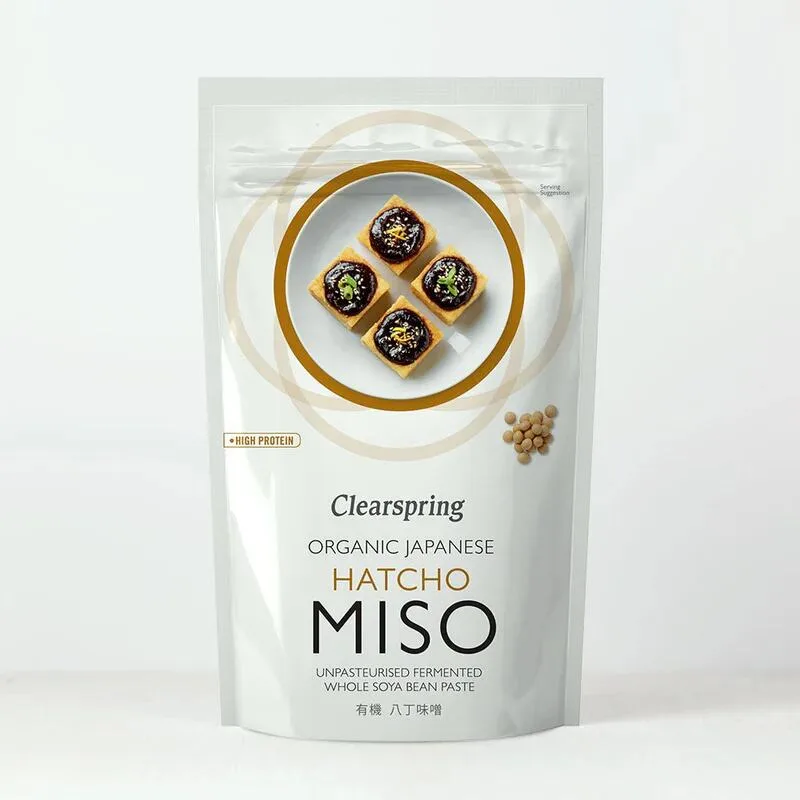
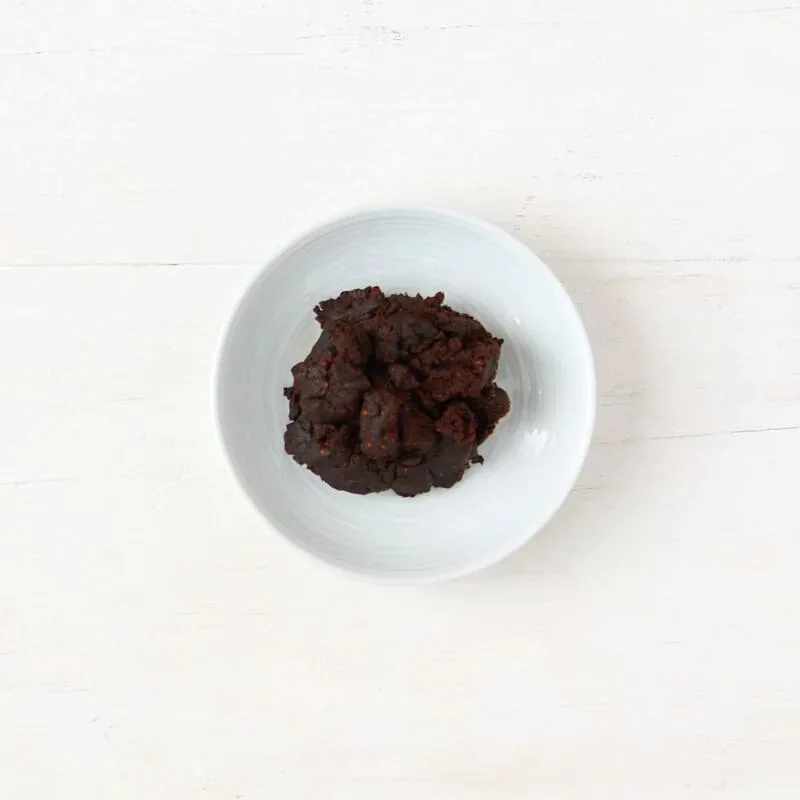
Prized for centuries, Japan's most famous miso, Hatcho miso, has been known as the miso supplied to the emperor for over a century. This pure soy miso is a true powerhouse of nutrients, providing twice the protein of long-aged brown rice or barley miso. Made with five centuries of craftsmanship and aged for up to 3 years in large cedar barrels, Hatcho miso is also considered one of the most effective.
Dark and rich, miso with a distinctive flavor that adds an exciting flavor nuance to everyday cooking, especially soups, sauces, and seasonings.
Usage:
Use in place of salt to enhance the flavor of soups, stews, beans, sauces, and spreads. One teaspoon of Hatcho miso will flavor approximately one cup of liquid. Dilute with a little hot liquid and add at the end of cooking. Avoid long cooking times to preserve the enzymatic properties of this unpasteurized miso.
What is Miso?
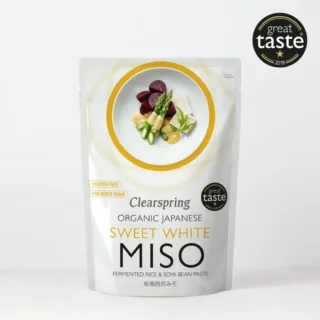
Miso is a traditional Japanese fermented staple food and condiment, made primarily from soybeans and a unique koji fermentation culture. Clearspring founder Christopher Dawson, who lived in Japan for 18 years, selected the highest quality, traditionally made Japanese miso for his selection.
All traditional Japanese miso is made by boiling organically grown whole soybeans and grains and mixing them with a koji culture (grains or soybeans inoculated with spores of the mold Aspergillus oryzae), sea salt, and water. The mixture is then naturally aged in cedar barrels for several months at room temperature, where the koji enzymes, along with natural yeasts and bacteria, break down the complex grains and beans into easily digestible amino acids, fatty acids, and simple sugars. The result is a miso with a rich, complex flavor that is rich in umami, the fifth taste.
Storage:
The best way to store miso to maintain its freshness and quality is to store it in a cool cupboard or refrigerator. However, this depends on climate conditions and personal preference. High temperatures encourage further fermentation, which, while not harmful, will darken the miso's color and intensify its flavor, and can cause pressure to build up inside the package.





Reviews
There are no reviews yet.